Dresden, Germany in December: Christmas Markets & Beyond
Our weekend in Dresden began with a comfortable train journey of about 2 hours and 20 minutes from Berlin Central Station, making the city an easy and relaxing winter escape. Arriving just in time for the festive season, we explored Dresden’s beautifully illuminated old town, where historic baroque architecture provides a magical backdrop for its famous Christmas markets.
A weekend in Dresden
Dresden, often called “Florence on the Elbe,” has a long and dramatic history. Once the glittering capital of Saxony, the city was famed for its art, architecture, and royal collections. Much of it was destroyed during World War II, but what makes Dresden special today is how carefully and beautifully it has been rebuilt—stone by stone—into a living museum of European history.
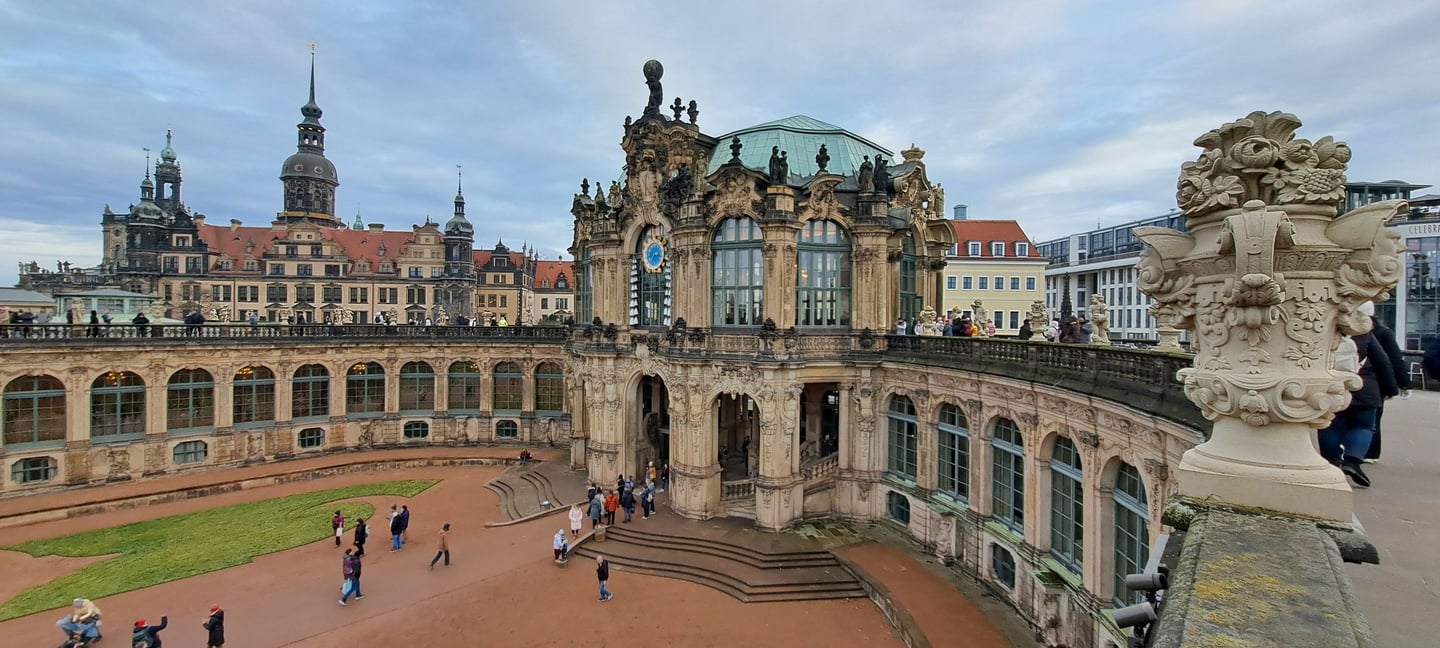
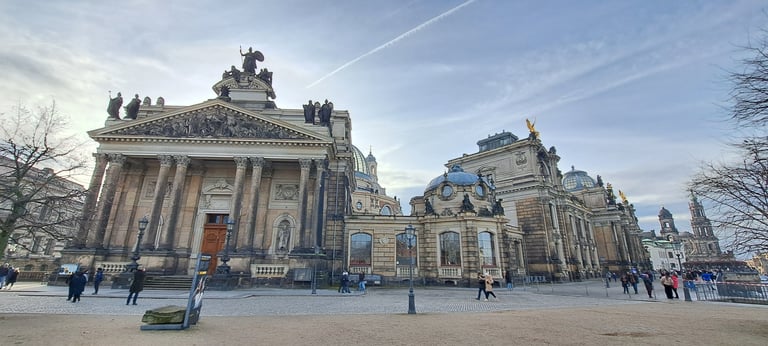
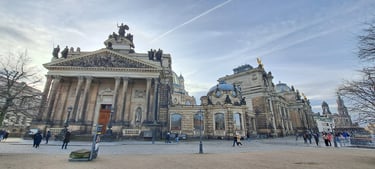
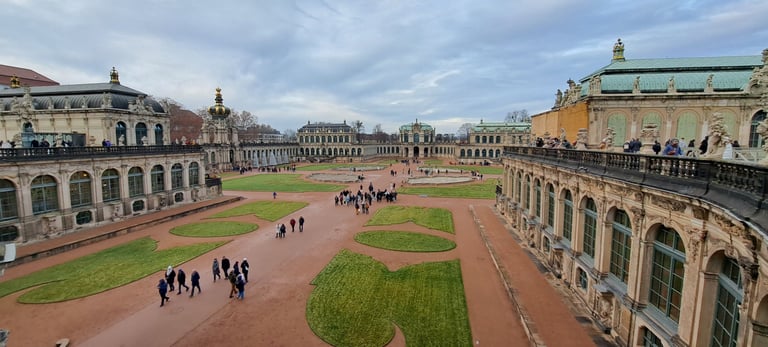
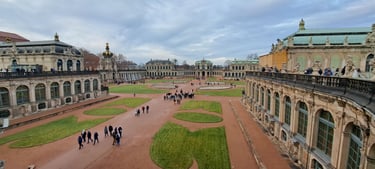
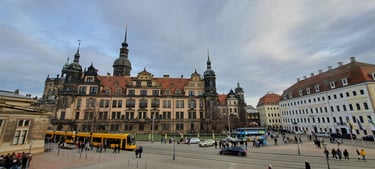
Walking through the historic old town (Altstadt), the main sightseeing highlights are concentrated in its historic old town and reflect the city’s rich cultural and artistic heritage: the Frauenkirche with its impressive dome, the Zwinger Palace complex housing world-class museums (www,museen-dresden.de/en), including the Old Masters Gallery and the Porcelain Museum, and is one of the finest examples of Baroque architecture in Europe, and the Brühl Terrace overlooking the Elbe.
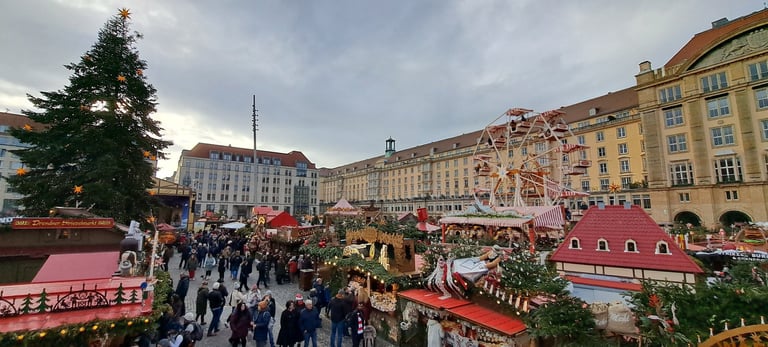
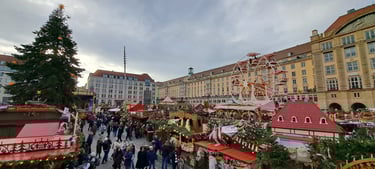
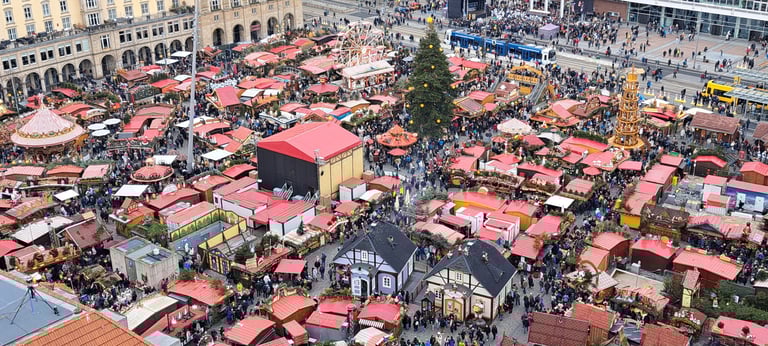
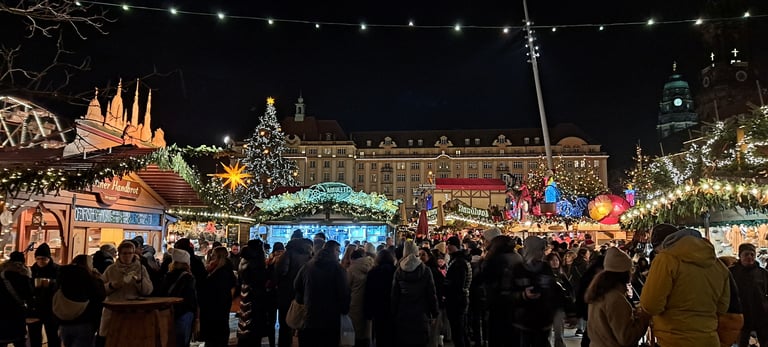
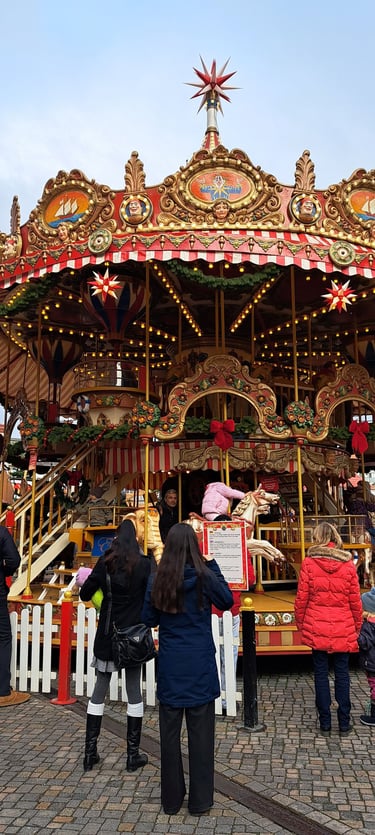
In December, the city truly comes alive with Christmas markets, especially the Striezelmarkt, one of the oldest in the world, with its origins dating back to 1434. Wooden stalls glow with lights, the air smells of roasted almonds and mulled wine, and traditional crafts and Stollen (Dresden’s famous Christmas cake) are everywhere.
The Striezelmarkt is Dresden’s iconic Christmas market. Held on the Altmarkt in the heart of the city, it transforms the square into a festive wonderland throughout Advent, with over 200 stalls offering traditional Saxon crafts, seasonal treats, and holiday gifts. The market takes its name from Striezel, an early name for Dresden’s famous Christstollen fruitcake, which you’ll find in many forms here.
Among its highlights are the towering Erzgebirge Christmas pyramid and the giant walk-in candle arch, both classic symbols of German Christmas culture, plus daily entertainment, culinary delights like gingerbread and punch, and a cheerful atmosphere full of lights, music, and festive spirit.
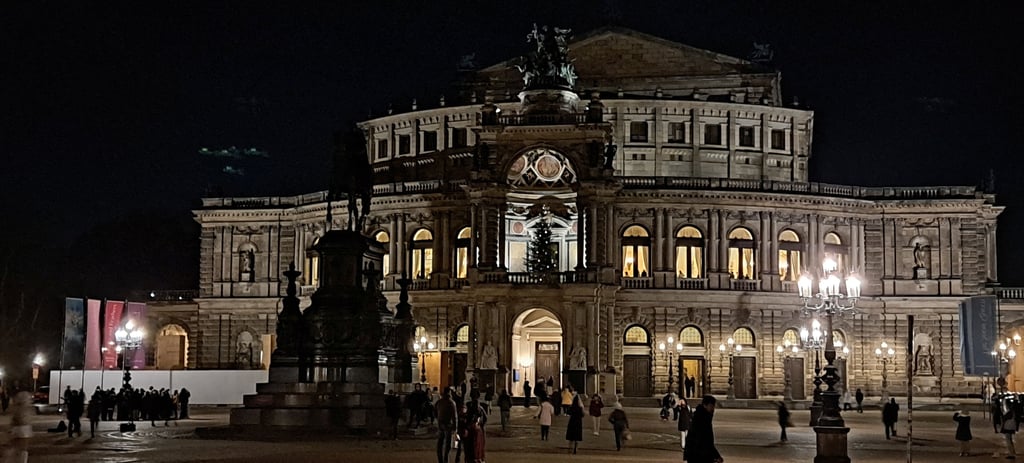
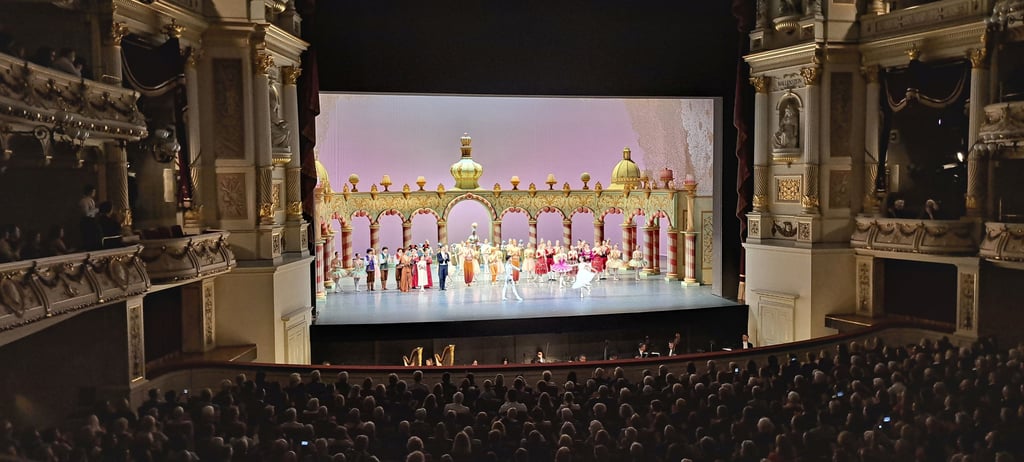
One of the highlights of our trip was an evening at the Semperoper (www.semperoper.de/en/index.html), an architectural masterpiece in its own right, renowned for its opera and ballet performances. Seeing The Nutcracker Ballet there in December felt perfectly timed—festive, elegant, and unforgettable, with the grandeur of the opera house adding magic to the performance.
We also spent time exploring Dresden’s rich artistic heritage. The Old Masters Gallery showcased world-class paintings in a stunning setting, while the Porcelain Museum (part of the Zwinger) offered a fascinating look at Meissen porcelain and Saxony’s long tradition of fine craftsmanship.
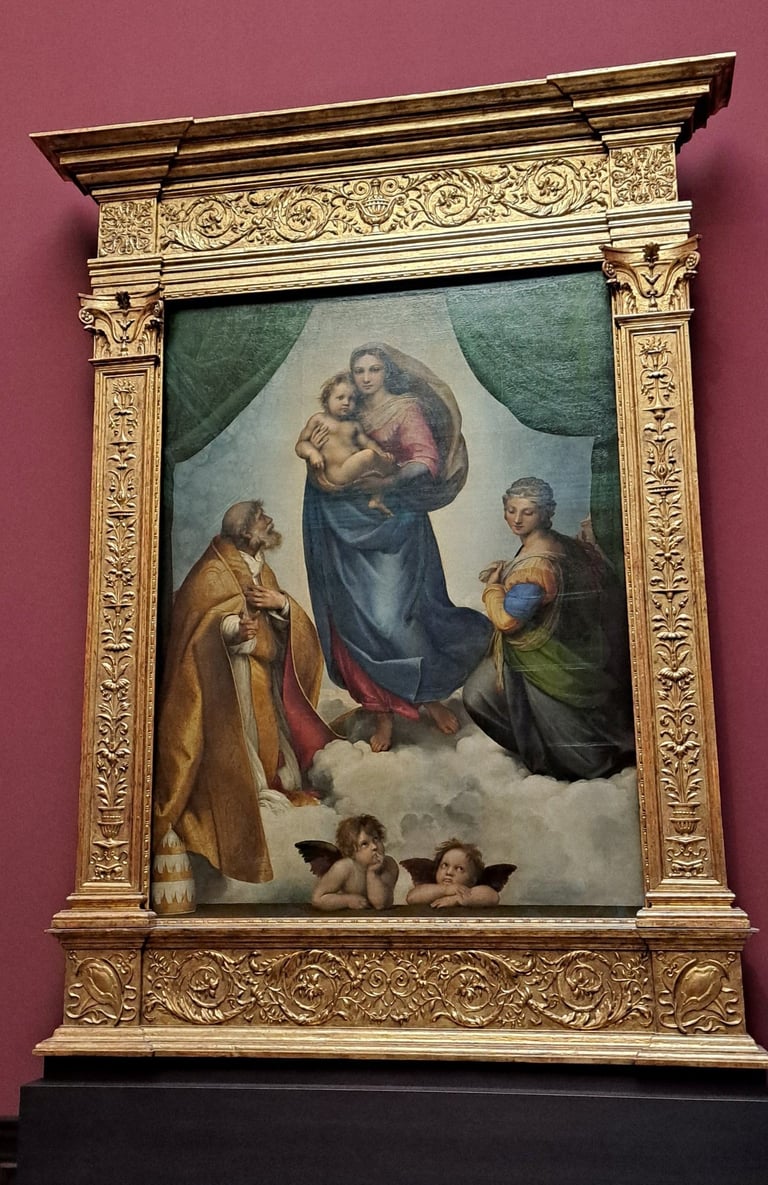
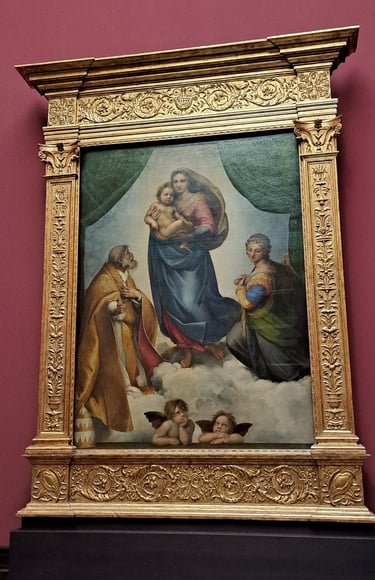
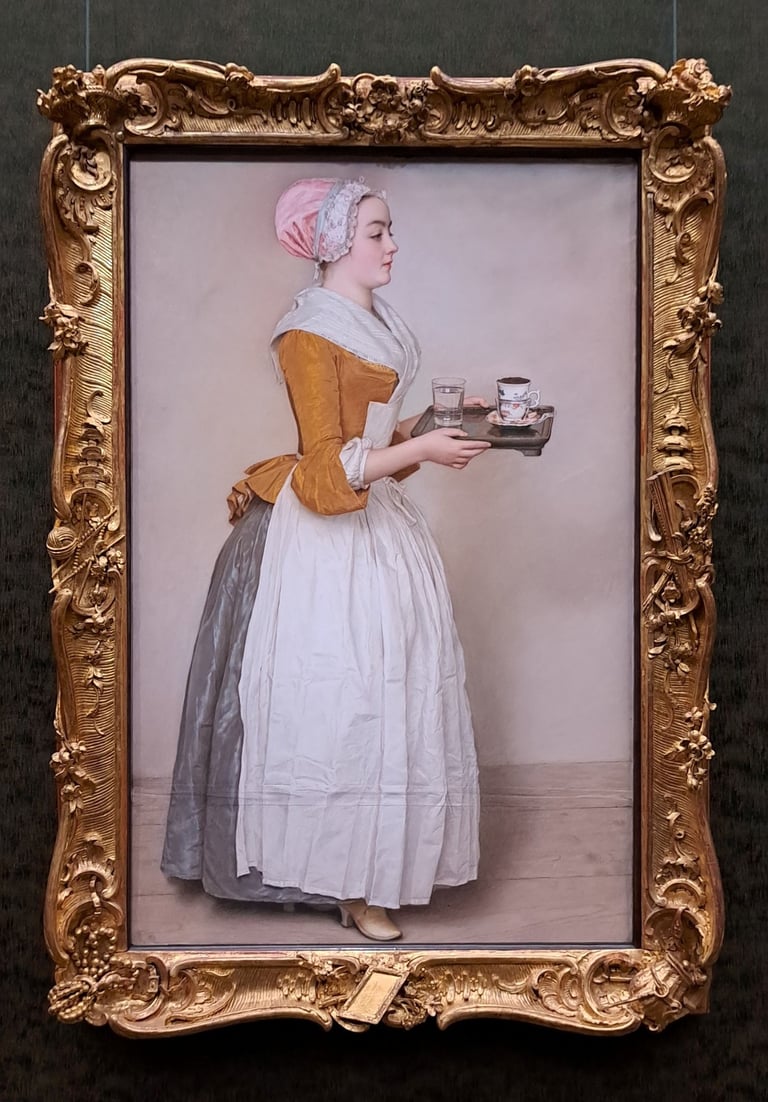
The Old Masters Gallery (Gemäldegalerie Alte Meister), housed in the elegant Semper Gallery at the Zwinger Palace, is one of Europe’s most celebrated art museums, showcasing around 750 paintings from the 15th to 18th centuries. The collection spans Italian Renaissance masterpieces, Dutch and Flemish Baroque works, and important German and French paintings, bringing together iconic names such as Raphael, Titian, Rembrandt, Rubens, Vermeer, Dürer, and Holbein.
Among the highlights is Raphael’s famous “Sistine Madonna,” a masterpiece that has drawn visitors for centuries, as well as exquisite works by other major artists from across Europe. Walking through the beautifully arranged galleries, you’ll experience a rich journey through the history of European art, where light, color, and emotion come alive in some of the world’s most treasured paintings.
Dresden: a city of resilience, art, and winter charm. Traveling by train made it effortless—and returning to Berlin, we carried with us the glow of Christmas lights, classical music, and centuries of history wrapped in winter air.
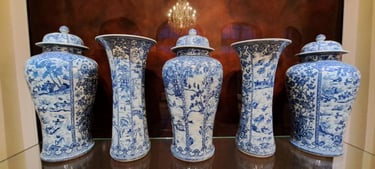
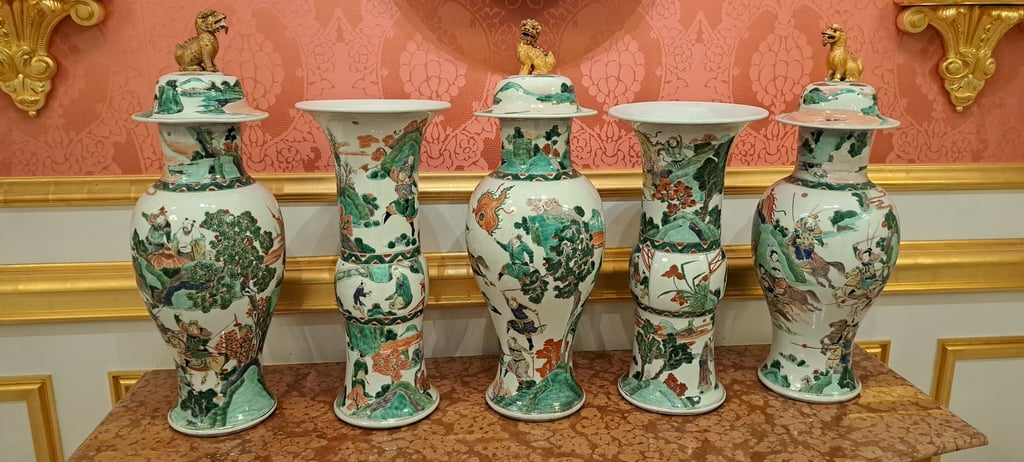
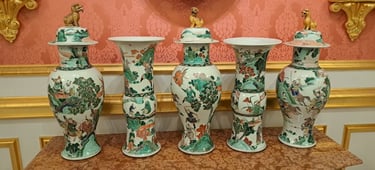
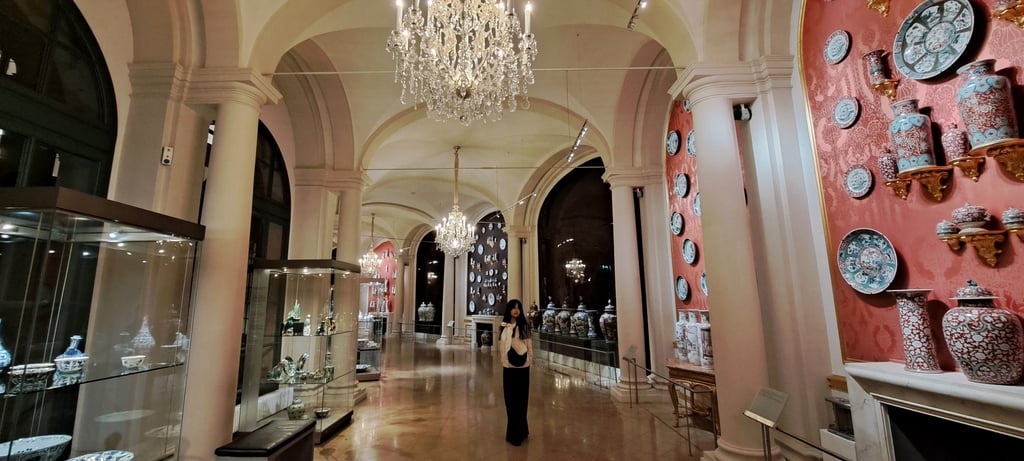
The Porzellansammlung in Dresden’s stunning Zwinger Palace is one of the world’s most important and extensive collections of porcelain, with around 20,000 objects spanning centuries of ceramic art. The museum’s origins go back to the early 18th century, when August the Strong—the Saxon elector and king—amassed an extraordinary trove of “white gold,” as porcelain was called, sparking one of Europe’s greatest porcelain collections.
A highlight of the collection is the Chinese porcelain section, featuring fine ceramics from the Ming and Qing dynasties. These pieces include elegant blue-and-white vases, decorated vessels, and other masterpieces that reflect the long-standing European fascination with East Asian porcelain. Many were acquired by the Saxon court in the early 18th century and show the superb craftsmanship and intricate decoration that made Chinese porcelain so prized long before European manufacturers learned to replicate it.
Walking through the galleries, you’ll also see how these Asian treasures influenced the development of European porcelain—especially Meissen ware—creating a fascinating historical dialogue between continents in ceramics.
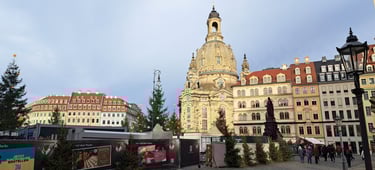
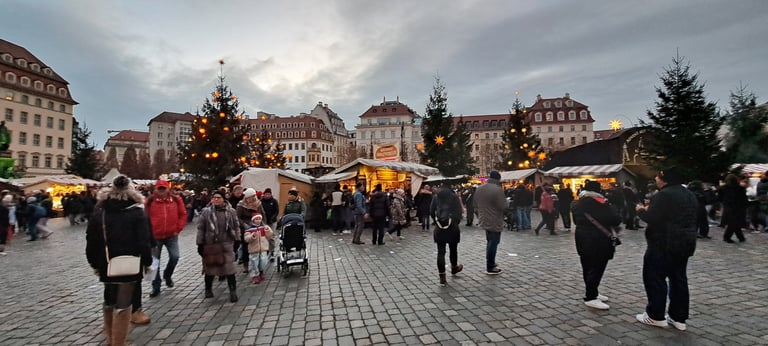
The Christmas market at Neumarkt, set against the stunning backdrop of the baroque Frauenkirche, is one of Dresden’s most atmospheric festive highlights. Known locally as “Advent auf dem Neumarkt,” this market feels like a step back in time: the stalls are arranged and decorated to evoke the look and feel of early 20th-century Advent markets, offering high-quality handmade crafts, traditional goods, and seasonal culinary delights in a historic setting.
Rather than a commercial fair, the market emphasizes craftsmanship and tradition—featuring artisans and guilds, church choirs, and carol singers that fill the square with a contemplative, old-world charm. At night, warm lights and the illuminated Frauenkirche create an especially magical atmosphere perfect for sipping Glühwein and browsing for unique Christmas gifts.
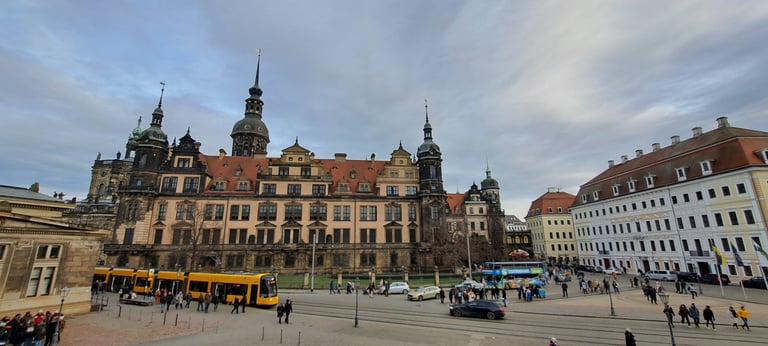
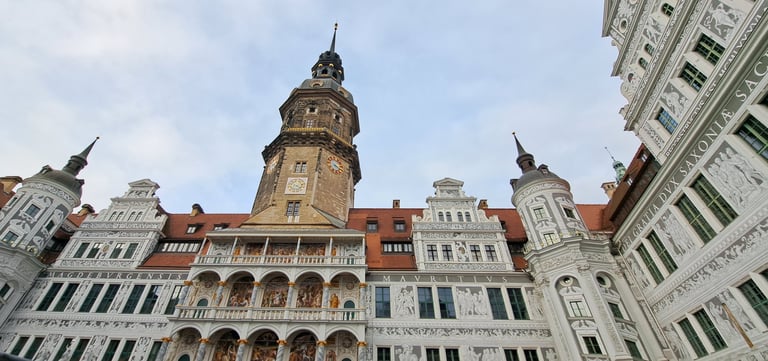
Other key sights include the Residenzschloss (Royal Palace) with its historic collections. The Grünes Gewölbe (Green Vault) is one of the most important treasure chambers in Europe. It displays an extraordinary collection of jewels, goldsmith works, precious stones, and intricate artworks amassed by August the Strong in the 18th century.









Practical Tips for Travelers
Getting there & around: Trains from major German cities (like Berlin) arrive at Dresden Hauptbahnhof or Neustadt. The city center is compact and walkable, and trams are efficient for longer distances. A day ticket for public transport is good value.
Best time to visit: December is ideal for Christmas markets, spring and early autumn are perfect for sightseeing with fewer crowds.
Tickets & reservations: Popular attractions such as the Semperoper, Green Vault, and major museums often sell out. Book tickets in advance, especially during weekends and the festive season.
Museum planning: Many top museums are clustered around the Zwinger and Royal Palace, making it easy to visit several in one day. Check opening days—some museums are closed on Mondays.
Cash & payments: While cards are widely accepted, cash is still useful at Christmas markets, smaller cafés, and for mulled wine deposits (Pfand).
Food & drink: Try local specialties like Dresdner Christstollen, Saxon potato soup, and regional wines from the Elbe Valley. Winter drinks like Glühwein and Kinderpunsch are everywhere in December.
Views & walks: Don’t miss a stroll along the Brühl Terrace or across the Augustus Bridge for classic city views, especially at sunset or after dark when buildings are illuminated.